Bluebird blog
What mag chloride does to your car, and how to get it off
Magnesium chloride is the liquid de-icer Colorado sprays on its roads all winter, and it holds moisture against your paint and metal long after the road has dried.
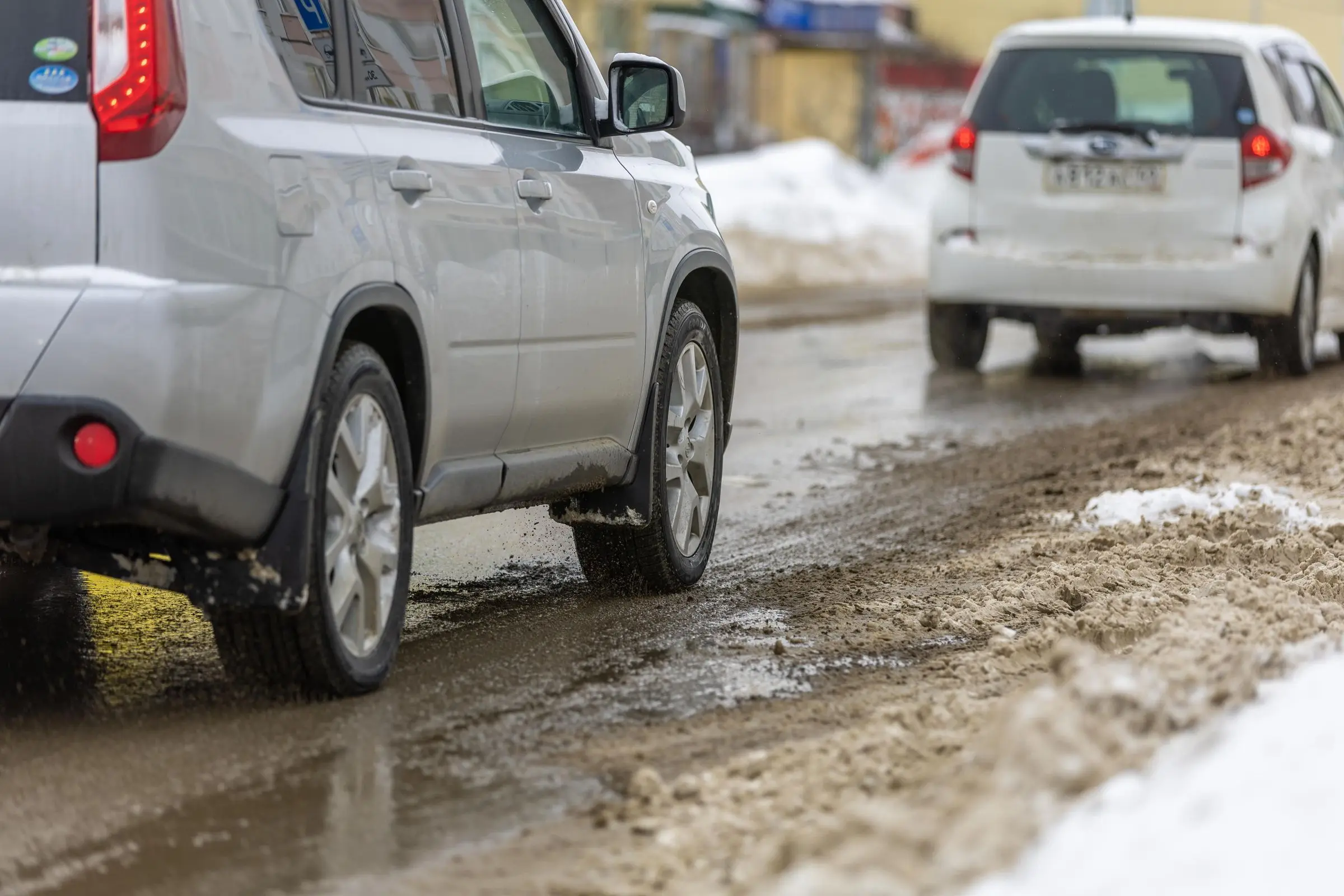
Magnesium chloride is the liquid de-icer Colorado sprays on its roads all winter, and it holds moisture against your paint and metal long after the road has dried. That last part is what makes it different from the rock salt most of the country uses, and it is why a car that looks clean can still be corroding.
What mag chloride actually is
Magnesium chloride is a salt brine sprayed on the road before and during winter storms to stop ice bonding to the surface. The Colorado Department of Transportation uses it across the state because it works at lower temperatures than rock salt and it can be applied before a storm rather than after.
It does its job well. The problem is what happens to the vehicle driving through it.
Why it is worse than ordinary road salt
Mag chloride is hygroscopic, which means it pulls moisture out of the air and holds on to it. A rock salt crust dries out. A mag chloride film stays damp, so the salt keeps working on your car in a dry garage on a sunny afternoon in February.
That matters most in the places you cannot see:
- The undercarriage, where it sits on bare metal, brake lines and fasteners
- Wheel wells, where road spray concentrates it
- Panel seams and door bottoms, where it collects and does not drain
- The lower third of every painted surface
On paint itself, the film dulls the finish and etches into the clear coat over a season. It also strips wax, which is the layer that was supposed to be protecting the paint from it.
Worth knowing that CDOT’s own position is that liquid de-icers are no more damaging to a vehicle’s finish than the sodium chloride products they replaced. Independent shops and detailers see it differently, and the honest summary is that neither is good for a car and both need washing off.
How often to wash it off
Rinse the car every one to two weeks through winter, and always within a few days of driving through a treated storm. The interval matters more than the method. A basic rinse done fortnightly beats a perfect wash done in April.
Two things do most of the work:
- A proper undercarriage flush. This is the part that rusts, and it is the part a quick wash misses entirely.
- Rinsing before you touch the paint. Salt crystals are abrasive. Wiping a dry, salted panel with a mitt drags them across the clear coat and puts in the swirl marks you will be paying to remove later.
What actually protects the paint
A ceramic coating gives the salt far less to hold on to and makes the car much easier to rinse clean. It is not a force field, and it does not remove the need to wash. What it does is turn a stubborn bonded film into something that comes off with water, which in practice means the car gets washed more often because washing it is less work.
Our ceramic coating starts at $299 and holds two to three years. If you are only going to do one thing before a Colorado winter, this is the one with the longest tail.
If the paint has already gone dull and gritty from a season of it, a coating will lock that in. Decontamination and correction come first, then protection.
The short version
Wash the car every one to two weeks between November and April, flush the undercarriage, and rinse before you wipe. If you want that routine to take a fraction of the effort, coat the paint first.
We do all of this at your home or office anywhere within 25 miles of Broomfield, and we bring our own water and power, which matters in winter when an outside tap is frozen shut.