Bluebird blog
Why your paint still feels rough after a wash
Paint that feels gritty after a wash is contaminated rather than dirty, because airborne grit and tree sap bond into the clear coat where soap cannot reach them.
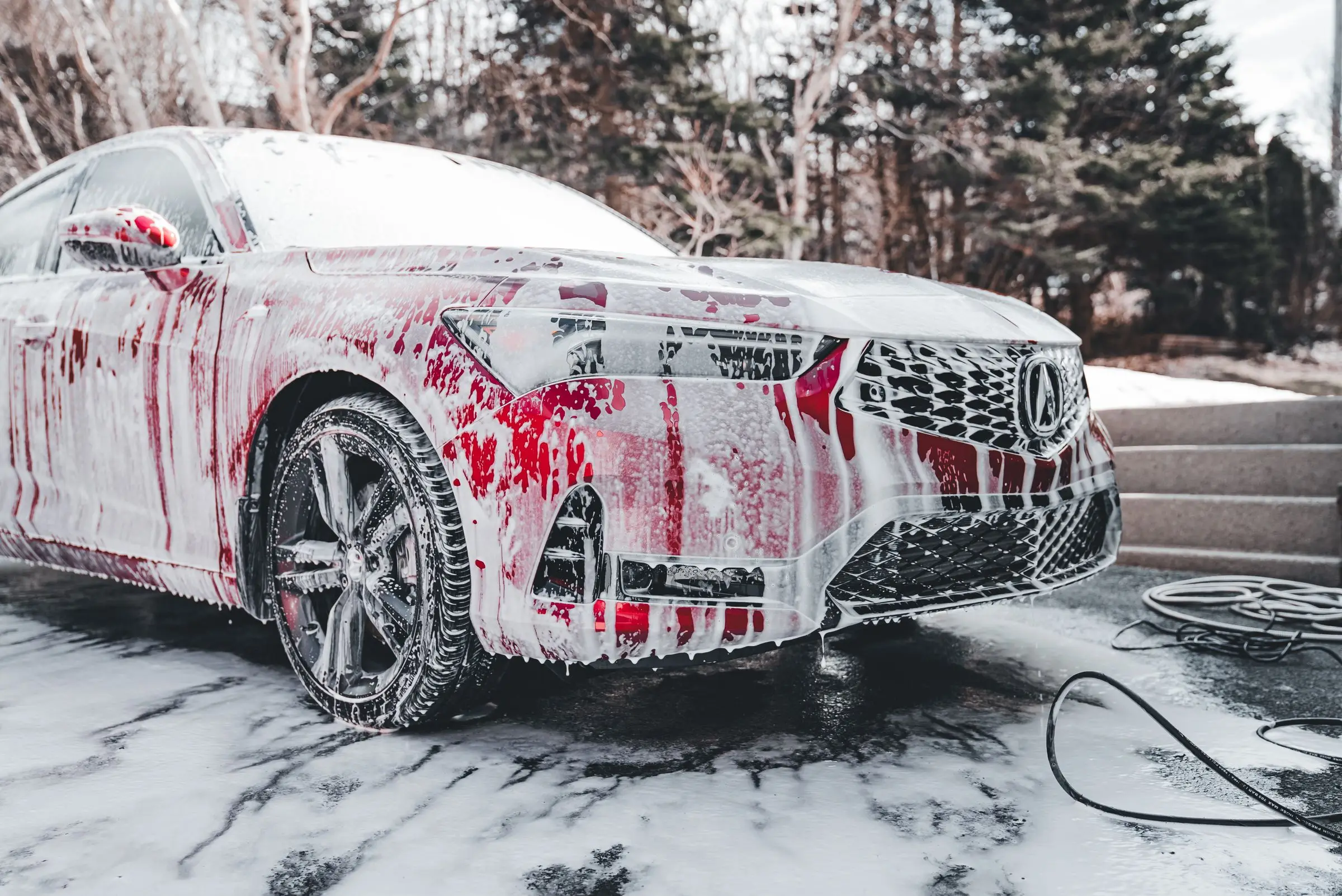
Paint that feels gritty after a wash is contaminated rather than dirty, because airborne grit and tree sap bond into the clear coat where soap cannot reach them. Washing harder does not help. The contamination is stuck to the paint at a level detergent does not operate at.
The bag test
Put your hand in a thin plastic sandwich bag and run it lightly over a washed, dry panel. The bag amplifies texture your fingertips miss.
Smooth means clean. Gritty, like fine sandpaper, means bonded contamination.
Do it on the bonnet, the roof and the lower rear quarters. The rear quarters are usually worst because they catch everything the rear wheels throw up.
What is actually stuck to it
Four things, and they arrive differently:
- Brake dust. Hot metal particles that embed themselves and then rust in place. Worst on wheels and the lower panels.
- Airborne metal. Fine particles from rail lines, construction and brake wear across the metro.
- Tree sap and honeydew. Sticky, and it etches into clear coat in strong sun.
- Road film and mineral deposits. Includes the magnesium chloride residue that Colorado roads carry all winter.
Out on the north and east edges of the metro, fine dust off open ground and construction adds to it, and dust is abrasive as well as dirty.
Why it matters beyond feel
Contamination keeps working after it lands. Embedded iron particles corrode in place and the corrosion spreads into the clear coat around them. Sap and mineral deposits etch.
It also ruins anything you put on top. Wax, sealant or a ceramic coating applied over contaminated paint bonds to the contamination instead of the clear coat, so it fails early and takes the contamination with it when it goes.
What removes it
A clay bar, after washing and before anything else. Clay shears the bonded particles off at the surface without cutting the clear coat, which is what makes it different from polishing.
Done properly it goes:
- Wash the car first, because claying a dirty panel drags grit
- Keep the surface lubricated throughout, or the clay marrs the paint
- Work small sections, folding the clay to a clean face as it loads up
- Drop it and it goes in the bin, because it will have picked up grit
Every full detail at $249 includes decontamination. It is also the first step of paint correction and of every coating we apply, because there is no point polishing or sealing over contamination.
How often
Twice a year suits most cars here, and roughly with the seasons: once in spring to take off what winter put on, once in autumn before the de-icer starts.
A coated car needs it far less often, because contamination struggles to bond to a coating in the first place. That is one of the quieter benefits of ceramic coating and it is worth more over three years than the water beading people buy it for.
The sequence that matters
Wash, decontaminate, correct if needed, then protect. Every step out of order either wastes the step before it or seals in a problem for years.